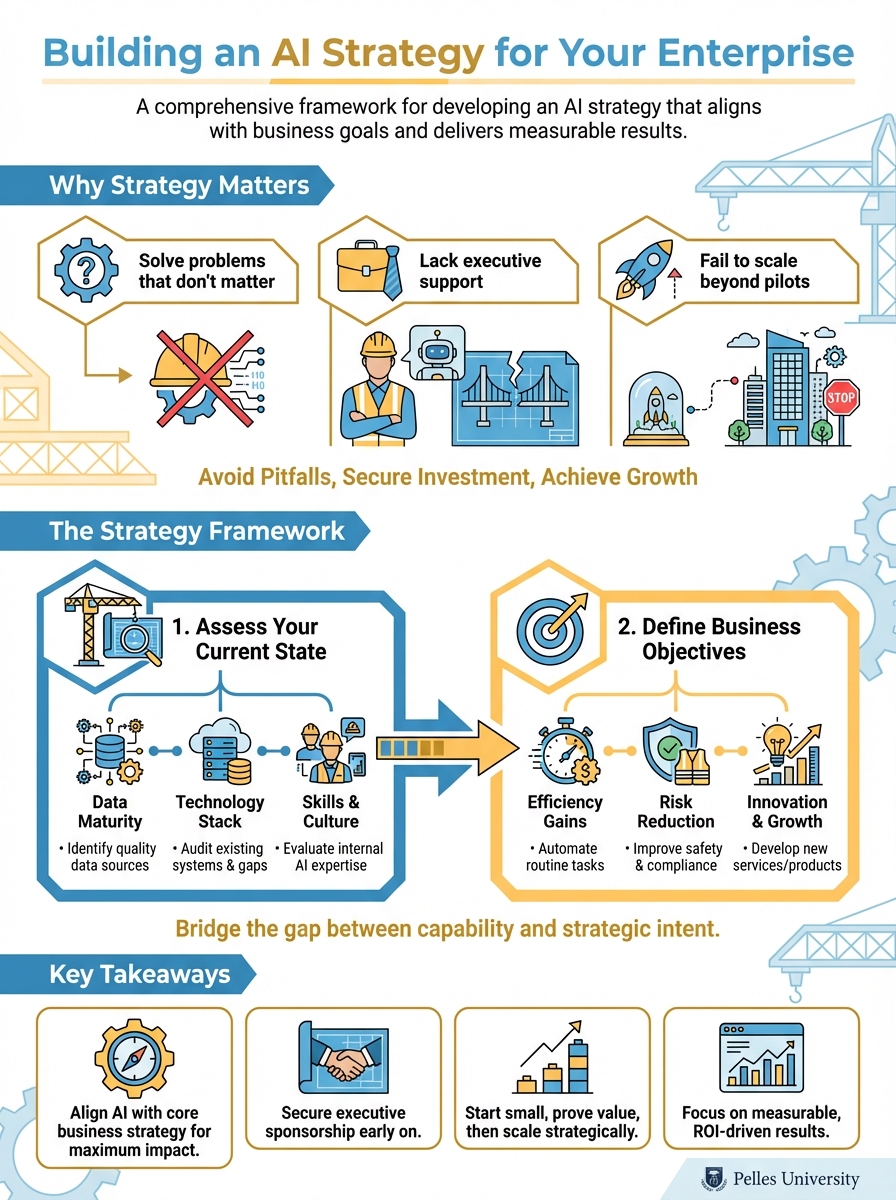
Building an AI Strategy for Your Enterprise
Many organizations rush into AI implementation without a clear strategy, leading to failed projects and wasted resources. A well-defined AI strategy ensures your investments deliver real business value.
Why Strategy Matters
Without a strategy, AI initiatives often:
- Solve problems that don't matter
- Lack executive support
- Fail to scale beyond pilots
- Don't integrate with existing systems
The Strategy Framework
1. Assess Your Current State
Before planning where to go, understand where you are:
- Data maturity: How clean and accessible is your data?
- Technical capabilities: What skills exist in your team?
- Process readiness: Which processes are candidates for AI?
2. Define Business Objectives
AI should serve business goals, not the other way around:
- Increase revenue
- Reduce costs
- Improve customer experience
- Accelerate decision-making
3. Identify Use Cases
Prioritize use cases based on:
| Criteria | Weight |
|---|---|
| Business impact | High |
| Technical feasibility | Medium |
| Data availability | High |
| Time to value | Medium |
4. Build the Roadmap
Create a phased approach:
Phase 1: Foundation
- Establish data infrastructure
- Build initial team capabilities
- Run pilot projects
Phase 2: Scale
- Expand successful pilots
- Develop MLOps practices
- Create governance frameworks
Phase 3: Optimize
- Continuous improvement
- Advanced use cases
- Innovation initiatives
Key Success Factors
- Executive sponsorship: AI needs top-down support
- Cross-functional teams: Combine technical and business expertise
- Iterative approach: Start small, learn fast, scale what works
- Change management: Prepare people for AI-augmented work
Measuring Success
Define KPIs for each initiative:
- ROI and cost savings
- Accuracy improvements
- Time reduction
- User adoption rates
Getting Started
The best time to start building your AI strategy is now. Begin with an honest assessment of your current capabilities and a clear vision of where AI can make the biggest impact.